Crackdown takes bite out of meetings
Updated: 2014-02-06 08:17
By Wang Zhuoqiong and Wang Wen (China Daily)
|
|||||||||||


|
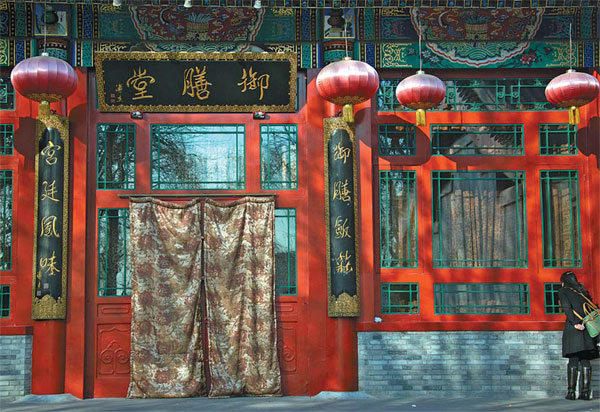
A local resident peeks into a high-end restaurant in Beihai Park in Beijing. The restaurant closed amid a government crackdown on lavish spending. [Photo / China Daily] |
Policies to curb lavish spending continue to squeeze profits of high-end restaurants, hotels
Linda Liu was surprised to find that booking a banqueting room for a company meeting was an unusually easy task during the Christmas season. Finding large suites at hotels in Beijing's central business district is usually impossible in December, but during last year's Christmas season, Liu, a marketing director for a beverage manufacturer, was offered promotional packages with plenty of available dates.
The meeting and conference industry nationwide has been experiencing a hard time since the government introduced policies to crack down on lavish spending of public funds almost a year ago. According to Xinhua News Agency, spending on conferences by the Ministry of Public Security has fallen 80.9 percent compared with a year ago.
"We urgently need to cut the number of government and institutional conferences," said Wu Shaoyuan, deputy director of the Alliance of China Conference Hotels. The number of conferences paid for with public funds has been declining since 2011, according to the 2013 China Conference Blue Book released by the China Tourist Hotel Association.
Enterprises, institutions, local governments and organizations are still the four main movers in China's meetings, incentives, conferencing and exhibitions market, but the percentage spent by institutions and governments continues to fall in line with central government regulations, said the report.
Meanwhile, the number of MICE organized by enterprises increased from 49.9 percent of the total in 2010 to 59.7 percent in 2012.
Government conferences accounted for just 5.2 percent of the United Kingdom's MICE market in 2012, while business conferences accounted for 81 percent, according to Wu.
Conference sizes have also been reduced year by year, in line with central government directives on thrift; conferences with 1,000 and more attendees declined by 75 percent from 2010 to 2012, according to the tourist association.
"The numbers prove that huge government conferences can be slimmed down," said Wu.
To solve the problem of overcapacity, the National Tourism Administration cancelled 21 festivals and 84 conferences this year, he added.
On a positive note, though, a greater number of professional agencies, such as travel agencies and conference service companies, are involved, which could save more money than events organized by the sponsors themselves.
The percentage of MICE events held by professional agencies increased from 9.1 in 2010 to 12.3 in 2012 and the MICE market also has seasonal and regional differences.
For example, a large number of conferences were held in January, March, April, July and December, while the slack seasons were February and October, according to the blue book.
Today's Top News
US warns airlines about 'toothpaste bombs'
Dutch security services bug phones
President Xi leaves for Sochi ceremony
Vatican's child abuse record slammed
Schroeder accuses US of disrespect
US official's criticism over China's ADIZ unfounded
NHK's denial of history slammed
China reports 11 H7N9 cases






Hot Topics
Lunar probe , China growth forecasts, Emission rules get tougher, China seen through 'colored lens', International board,
Editor's Picks

|

|


|

|
|
|