China-Europe
From mutually beneficial to mutually transformational Sino-European relations
Updated: 2011-06-28 13:01
By David Gosset (Euro-China forum)


 Twitter
 Facebook
 Myspace
 Yahoo!
 Linkedin
 Mixx
MixxAddress by David Gosset, founder of the Euro-China Forum, at the opening of the 9th Euro-China Forum, UNESCO, Paris.
June 27 2011
On behalf of all those from China and Europe who have been involved in the Euro-China Forum since 2002 I would like to welcome you at the 9th edition of a process which is gaining momentum. It is for me an immense pleasure to open our Forum, a work in progress,here in Paris.
Speakers at the 9th Euro-China Forum Jacques Chirac Irina Bokova Liu Ji Li Shimo Romano Prodi Guan Naijia Tong Shijun Xu Bo Lu Qiutian Isabelle Fernandez Laurent Fabius Huang Baifu Shi Shuyun Ni Ning Zheng Ruolin Pierre Morel Jose Luis de Sales Marques Massimo Bergami Augusto Soto, ESADE and External Analyst for Elcano Royal Institute Riccardo Sessa Xavier Prats Monne Dusan Sidjanski Petr Hyl Iman Stratenus Dominique de Boisseson Zdravko Popov Ravi Shankar Carlos Gaspar Thierry Dana Serge Abou Hellmut Schutte Horst Loechel Edward Yan Ming Zhu History of Euro-China forum It is the Academia Sinica Europra at the China Europe International Business School (CEIBS) in Shanghai which took the initiative of the Euro-China Forum in 2002. Once a year in a different European city, Chinese and European leaders meet on the occasion of the forum in order to improve mutual understanding and to discuss issues of common interest. In 2002, several months after China's entry into the World Trade Organization the inaugural forum was organized in Spain. One year later, in cooperation with the Irish Ministry of Foreign Affairs and the UCD Michael Smurfit Graduate School of Business the forum traveled to Ireland's capital Dublin. For its third edition the forum took place in Sweden with the strong support of the Stockholm County and the Swedish government. In 2005 the gathering was co-organized with the Casa Asia in Barcelona. The fifth edition took place in Sofia, Bulgaria. Under the aegis of the Prime Minister Sergei Stanishev the 2006 forum was strongly supported by the Bulgarian government and co-organized by its Diplomatic Institute. For the first time, and in connection with Bulgaria’s unique position on the Black Sea, the Forum explored all the dimensions of a "New Silk Road" on a cooperative Eurasia. In 2007, the 6th Euro-China Forum took place in Lisbon under the high patronage of Mr Anibal Cavaco Silva, president of the Portuguese Republic. During the Portuguese Presidency of the European Union, one month after the 17th Congress of the Chinese Communist Party and two weeks before the 10th EU-China Summit, the 6th Euro-China Forum provided a platform for both stimulating and useful debates. In 2008, after the Beijing Olympic Games, the 7th Euro-China Forum gathered in Kiev, the capital of Ukraine. In a two-day forum entitled "The 21st century Silk Roads" 300 decision makers, academics, economists from Europe and Asia discussed the relationship between Europe and China. The 7th Euro-China Forum greatly benefited from the support of Mr Viktor Yushchenko, President of Ukraine at the time of the event. To mark the 60th anniversary of the People's Republic of China in 2009, the 8th Euro-China Forum took place in Tianjin, a city which played in the first half of the 20th century an important role in China's modernization and which is now with 11 million inhabitants one of the major metropolis in Northeast Asia. Nine years old only the Euro-China Forum is gaining momentum. In the words of Zhao Qizheng, former Director of the State Council Information Office of the People's Republic of China (1998-2005) : "The Euro-China Forum provides a platform for exchanges and discussion, does enhance mutual understanding and makes great contribution to the strategic relationship on all fronts between China and Europe. The Euro-China Forum is gaining in influence". Mr Laurent Fabius, former Prime Minister of the Republic of France (1984-1986), former President of the French National Assembly (1988-1992 and 1997-2000) and a friend of the Euro-China Forum commented: "We, Europeans and Chinese, should seize every opportunity to smoothen out potential frictions and to bridge the gap between the intensification of our commercial relationship and the weakness of our intellectual exchanges. In this respect, the Euro-China Forum plays a crucial part. And its influence keeps growing." 9th Euro-China Forum, UNESCO, Paris: June 27-28 2011. Source: Euro-China Forum
We meet at the UNESCO because we cherish the values of this great and noble institution.
David Gosset
Founder of the Euro-China Forum
Former President of France
Director-General of the UNESCO
Honorary President CEIBS
Former Vice President of the Chinese Academy of Social Sciences
Founder and Managing Director Chengwei Ventures LLC
Former President of the European Commission
Former Prime Minister of Italy
Vice President of Nankai University
Vice President of the Shanghai Academy of Social Sciences
Former Vice-Commissioner of the Shanghai World Expo
Current Special Advisor to the UNESCO
Former Ambassador of China in Germany
Former President of the Chinese People's Institute for Foreign Affairs
Director UBIFRANCE Chine
Former French Prime Minister
Vice Chairman of the Chinese Institute for International Strategic Studies
Chinese Ambassador at the UNESCO
Executive Vice Dean of School of Journalism and Communication, Renmin University of China
Correspondent of the WENHUI BAO in Paris
EU Special Representative for Georgia and Central Asia
Former Ambassador of France in Russia and China
President of the Institute of European Studies of Macau
Dean of the Alma Business School, University of Bologna
Ambassador of Italy to NATO
Former Ambassador of Italy in China
Deputy Director-General for Education and Culture at the EU Commission
Special Advisor to the President of the EU Commission Jose Manuel Barroso
Executive Chairman of the China Investment Forum
CEO China International SOS,
Former President of the EU Chamber of Commerce in Shanghai
Director of the Diplomatic Institute of Bulgaria
China Daily
Director of the Portuguese Institute of International Relations
Founder TD Conseil
Former Diplomatic Advisor of the former French President Jacques Chirac
Former EU Ambassador in China
CEIBS European Chair for Global Governance and Sino-European Business Relations
Director of German Centre of Banking and Finance
CEIBS Professor of Economics
Frankfurt School of Finance & Management
Chairman of the Shanghai International Banking and Finance Institute (SIBFI)
Group Chief Executive Officer – Chiic & Chic Group
The Euro-China Forum is associated with a United Nations’ institution because there can not be any real global endeavor which would ignore what China – 1/5 of mankind – thinks, how the Chinese people look at the world and how China sees its position in the 21st century world-system.
We gather in the house of culture because it is based on their cultural affinities – elements of permanency – that Europe and China have to build a partnership that goes beyond ever-varying trade, business or political interests. By placing culture as the keystone of their relationship, the two Eurasian civilizations could enter a stable and meaningful cooperation having over time global constructive impact.
Historian Christopher Dawson (1889-1970) already indicated after the first tragedy of the 20th century the direction to follow: "If a true world-civilization is ever to be created, it will not be by ignoring the existence of the great historic traditions of culture, but rather by an increase of mutual comprehension" (The Making of Europe, 1932).
We are honored by the participation and strong support of Professor Dusan Sidjansky who represents European intellectual excellence, and his presence is an invitation to remember Denis de Rougemont. Together, in the “Centre Européen de la Culture” – the European Cultural Center –, they gave a new life to the “Europe of the Spirit” and promoted the “dialogue between cultures”, an expression first coined by Denis de Rougemont. For today’s Sino-European link, their work can be a source of inspiration.
After the European integration’s long march, following Europe’s re-unification in the post USSR period, the European Union has now to adjust to an era of intense globalization. An ambitious China policy founded on a just appreciation of the Chinese world has to be one of the main pillars of the EU’s global diplomatic action.
The vast majority of the discourses on China are characterized by at least one of the four following shortcomings, sometimes, in surprisingly narrow approaches they combine all of them :
First, one often fails to fully integrate the fact that China’s size is in itself of global significance.
Second, one misinterprets the depth and the nature of China’s mutation, this irreversible process is simply the world’s major factor of change.
Third, one fails to take into account the notion that global interdependence will intensify in the foreseeable future, ups and downs will certainly affect globalization but de-globalization has become almost impossible. The West has become a part of the solution of China’s problems and vice versa.
Fourth, one makes the incomplete assumption that Sino-Western relations have to vary on a scale which spans from mutually antagonistic to mutually beneficial while another paradigm could serve as both an engine and a compass of our actions : Sino-Western relations can also be mutually transformational. In order to make sense of a new reality it is often useful to question our most common instruments of measure and appreciation, to be ready to unlearn established narratives and to relearn with new analytic tools.
In that sense, the Chinese renaissance can not only be understood as a catalyst for globalization, but it does also enlarge the global village by opening new economic, political, diplomatic, intellectual and artistic horizons. China’s revival not only widens the Chinese people’s representation of the world but it also expands a world-system which has been, to a certain extent, contracting for more than five centuries. The analysis of the interactions between the Chinese renaissance and what can be called the global village’s new terrae incognitae is in its infancy but the way they will be mapped as much as the origin of their cartographers will be highly consequential.
While 21st century China is still facing considerable internal and external challenges, it could be argued that for the very first time in the world history a process of globalization and a great economic convergence have truly unified mankind. What will be the West’s attitude in this new configuration?
The ability of the West to understand China’s revival and to react constructively to the new dimensions it entails will not only impact its own future but will also shape the landscape of the 21st century global village.
In his magnum opus Study of History (1934-1961) Arnold Toynbee captured a fundamental pattern :
“Growth takes place whenever a challenge evokes a successful response that, in turn, evokes a further and different challenge. We have not found any intrinsic reason why this process should not repeat itself indefinitely, even though a majority of civilizations have failed, as a matter of historical fact.”
In the coming decades, if the West responds wisely to the Chinese rise, it will grow, and Sino-Western synergy could ideally take the global system at another level, but if Western elites – the “creative minority” in Toynbee’s terminology – fail to measure and embrace China’s metamorphosis the West will lose momentum and the scenario of a cooperative world will look more and more improbable.
In a situation of perceived loss and decline the West would certainly develop an irrational fear of China and one would take the risk to enter the somber logic famously described by Thucydides to explain the Peloponnesian conflict: “Athens’ rise and the alarm it inspired in Lacedaemon made war inevitable”.
Fundamentally, the West faces a choice between vain short term maneuvers to freeze an impossible status quo and the generous but arduous effort of a recreation of itself in a deeply changing environment. In other words, either it becomes a relatively passive and anxious observer of the power rearrangement or it participates in an energizing movement to a larger process of transformation.
While Sino-centric or Western-centric politics could lead to endless tensions or even conflicts, cosmopolitan thinking and actions would take us always closer to peace and development.
Contrary to what partial examinations can suggest, China is not an obstacle to a period of global enlightenment. Almost 80 years ago, Chinese thinker and diplomat Hu Shi (1891-1962) introduced in his Haskell lectures a highly valuable framework to make sense of Chinese post imperial dynamics : “Slowly, quietly, but unmistakably, the Chinese renaissance is becoming a reality”.
China’s traditional secularism and humanism have in the past inspired the West. Diplomat and man of letters Zhang Pengchun (1892–1957) who served as vice-chairman of the United Nations Commission on Human Rights and played a pivotal role in drafting the 1948 Universal Declaration of Human Rights noted during the debates chaired by Eleanor Roosevelt : “In the 18th century when progressive ideas with respect to human rights had been first put forward in Europe, translations of Chinese philosophers had been known to and had inspired such thinkers as Voltaire, Quesnay and Diderot in their humanistic revolt against feudalistic conceptions”.
As six centuries ago the Italian renaissance reaffirmed man’s central position and opened a period of progress, creativity and innovation for the European continent, the Chinese renaissance can signal a 21st century world humanistic movement. In that sense, China’s reemergence should not be perceived as a threat but as one of the major catalysts of a new axial period.
The new Director-General of the UNESCO is guided in her actions by the concept of “NEW HUMANISM”. The theme of our encounter is : “NEW HUMANISM IN A GLOBALIZING WORLD”. As a living civilization-State China will greatly contribute to this promising movement.
While the Chinese intellectuals “rethink China”, the West has certainly to question its own narratives on an ancient civilization which has embarked in a process of economic modernization, socio-political reforms, cultural metamorphosis and of discovery of the world.
Jacob Burckhardt’s classic “The Civilization of the Renaissance in Italy” (1860) presents a chapter on “the discovery of the world and of man” (part IV) whose opening is a powerful synthesis: “Freed from the countless bonds which elsewhere in Europe checked progress, having reached a high degree of individual development and been schooled by the teachings of antiquity, the Italian mind now turned to the discovery of the outward universe, and to the representation of it in speech and in form”. What strikes today’s Burckhardt reader is the fact that his words are also, mutatis mutandis, the outlines of the Chinese contemporary dynamics: economic development, individual emancipation, re-interpretation of the Chinese tradition have created the conditions of China’s journeys to the world.
China’s opening up has already enriched the global village but if the West opens itself to the possibilities that the Chinese renaissance offers, Sino-Western cross-fertilizations would not only be mutually beneficial – the quantitative and objective win/win – but mutually transformational – a qualitative and almost limitless creative process of values and of a greater common good.
Here at the UNESCO, one has to think and manage an immensely stimulating paradox: communications and technologies have reduced distances, the planet has shrunk in the globalization process but simultaneously permanent and inevitable dialogues between civilizations have broadened our horizon and enlarged our world, and it is from these new immaterial territories, from these utopian terrae incognitae, that the vision of a better future can be imagined.
Let us explore, map and experience together these unknown territories in quest of new forms of collaboration and solidarity and let the quest for a renewed humanism be the Sino-European project which will give sense to our collective actions.
E-paper

Pearl paradise
Dreams of a 'crazy' man turned out to be a real pearler for city
Literary beacon
Venice of china
Up to the mark
European Edition
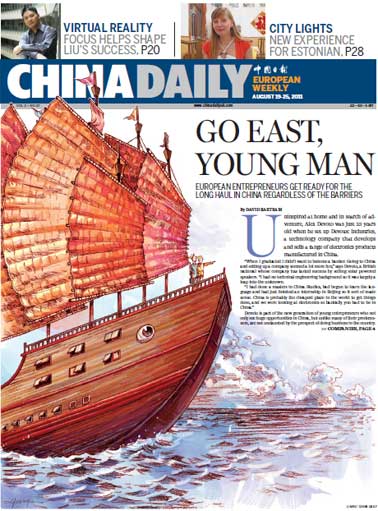
Specials

Power of profit
Western companies can learn from management practices of firms in emerging economies
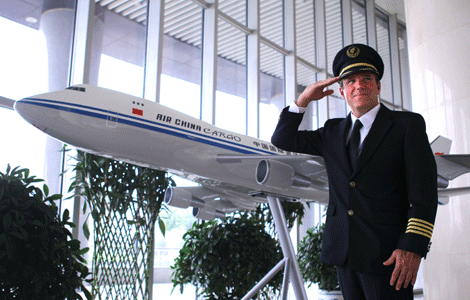
Foreign-friendly skies
About a year ago, 48-year-old Roy Weinberg gave up his job with US Airways, moved to Shanghai and became a captain for China's Spring Airlines.
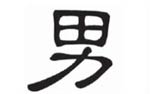
Plows, tough guys and real men
在这个时代,怎样才"够男人"? On the character "Man"