All in the family
Updated: 2010-12-10 14:12
By Zhao Yanrong (China Daily European Weekly)


 Twitter
 Facebook
 Myspace
 Yahoo!
 Linkedin
 Mixx
Mixx
|
|
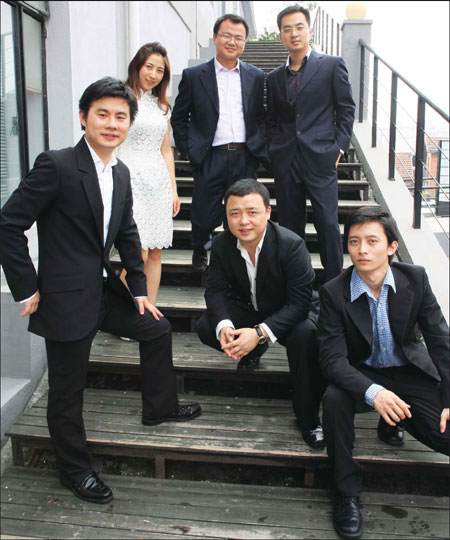
Thirty years after China's economic reform, private enterprises have become a mainstay of the economy with family enterprises playing a major part. There are 130,000 private enterprises registered in Wenzhou alone. And there are about three shareholders for each company, with almost 400,000 families in the wealthy city in Zhejiang province owning businesses, says Wang Yingqi, director of the city's municipal bureau of human resources.
Up to 60 percent of Wenzhou's private enterprises will complete handing over power to their next generation in the next decade, a survey conducted by the bureau two years ago shows.
Instead of focusing on their traditional businesses, mostly in the footwear and clothing industries, Wenzhou's richest scions seem to be interested in developing their wealth their own way.
Yu Yizhou, 27, has been earmarked by his father to inherit a multimillion-yuan shoe company in Wenzhou. After one and half years working in his father's Sincere Shoes company, Yu now handles the company's biggest international client.
Compared with the bigger manufacturing factories, Yu sees Sincere Trade, the trading company under the footwear group, as the future after he takes over the company.
Manufacturing industries in Wenzhou are going downhill, Yu says.
"Production costs have been rising and I've seen many factories closing down or moving inland. But Wenzhou still has the advantage of being an important international trade hub," Yu says.
Yu has contacted a few wine companies in South Africa even as he continues working with local shoe companies.
"Footwear production will still be the major part of our business, but it will not be the only project we will have in the future," he adds.
For Xie Shusheng, making shoes is one of the hardest jobs in the world. The future owner of Dibang Shoes, another multimillion-yuan shoe company in Wenzhou, says financial investments and new energy products are likely to be the major businesses of the future, if he is put in charge of the company.
Dibang Shoes is one of several shoe manufacturers in Wenzhou, which exported more than $218 million (165 million euros) worth of shoes to the United States last year. Total shoe exports from Wenzhou reached $2.91 billion, with European Union countries taking the lion's share.
Xie still remembers how his father slept only two hours every day to make shoes. Even today, Xie admits that his father's work ethic is incomparable.
"My father started the company from nothing but his hands, but I have such a great starting point with sufficient funds, developed business networks and an international educational background," Xie says. "I should be able to make a bigger fortune based on my advantages."
Zhou Wende, chairman of the Wenzhou small and medium-sized enterprises promotion association, says more than 30 percent of the second-generation of family enterprises chose different businesses, mostly related to financial investment.
"Some of them are doing well in capital investment. When the profit margins of the whole manufacturing industry gets smaller, many young company owners prefer businesses based on capital rather than manufacturing," Zhou says.
Still, most decisions of Wenzhou companies' successions continue to be made by their founders rather than the successors.
Handling their relationship with their parents who retain control of the companies is also a common issue among Wenzhou's second-generation rich.
Yu Yizhou of Sincere Shoes can pass off for a film star. He once thought of getting into the film industry by studying film production in Britain. But his father refused to pay the tuition fees unless he enrolled in business school.
Yu now believes that being born into wealth means "more responsibilities" to the family.
"I might follow my interests in film for fun, but I think I will never have the chance to make it my career," he says.
Yu will soon have his own family and become a father someday. But he is not that eager to pass the family business to his children.
"Whether they will continue Sincere Shoes depends on their interests and the development of the industry," Yu says. "I didn't have much chance to choose while I grew up, but I will try to make sure my children get what they want."
Xie Shusheng, who has a younger sister working as an assistant for a cosmetics company in Shanghai, sometimes envies her. "She is doing what she wants, which is less stressful and more passionate," Xie says.
Wenzhou's younger generation received a better education than their parents, with most of them studying overseas for years and holding different management theories from their parents. Some have tried to adapt Western business practices to the Chinese market, and many of these approaches have not been well accepted by their parents or successful in the market, Zhou Dewen says.
Xie Shusheng started applying his management ideas to the company warehouse by installing several computers. Previously, the warehouse team recorded all movements in a notebook and due to inaccuracies, many products would go missing.
While the computerized system is working well and improving daily, Xie's father remembers only the mistakes he made.
"I've been working with my father for a year, but I have never gotten any nods of approval from him yet."
Today, despite the company employing more than 1,000 workers, Xie's father, who started the business with a small group of people, still wants to deal with everything in the company himself.
According to Xie, if his father saw a piece of paper lying in the compound, he would pick it up himself before calling in the cleaners.
"I don't think that's what the general manager of the company should do. We have different levels of managers for reasons," he says.
Xie also has difficulties with some mid-to high-level executives, especially a number of senior managers who have been with the company for more than 20 years.
"They may not want me as a boss I'm someone they have been seeing as a child all the time," he says.
The second-generation managers are also treated like star employees who are being closely watched, says Chen Xuepin, co-founder of Relay China Youth Elite Association, an association for young leaders from family enterprises.
"If they do well, some will say that is how it should be. If they fail, however, they'll be blamed for not doing enough."
To help address these concerns, the Wenzhou municipal government offers training courses for these young businesspeople, covering topics like the Chinese business environment and efficient ways of running a company in China.
"If these business transitions cannot be carried out smoothly, it will be a big problem for the sustainability of Wenzhou's economic development," says Hong Zhenning, vice-chairman of the Wenzhou Social Science Association.
Yu Ran contributed to this story.
E-paper
Ear We Go
China and the world set to embrace the merciful, peaceful year of rabbit
Preview of the coming issue
Carrefour finds the going tough in China
Maid to Order
European Edition

Specials
Mysteries written in blood
Historical records and Caucasian features of locals suggest link with Roman Empire.
Winning Charm
Coastal Yantai banks on little things that matter to grow
New rules to hit property market
The State Council launched a new round of measures to rein in property prices.