Op-Ed Contributors
Tibet moves ahead with the nation
Updated: 2011-05-23 08:00
By Du Yongbin (China Daily)


 Twitter
 Facebook
 Myspace
 Yahoo!
 Linkedin
 Mixx
Mixx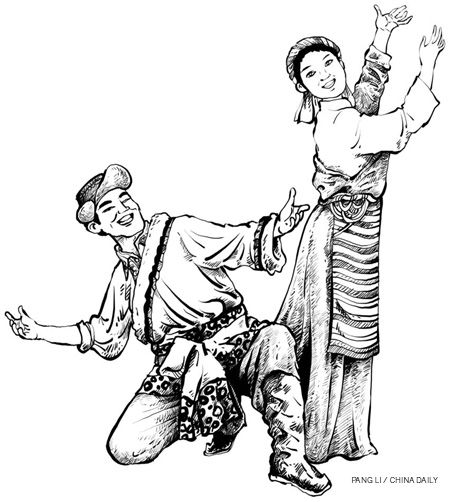
On May 23, 1951, the central people's government and the former local government of Tibet signed the Agreement on Measures for the Peaceful Liberation of Tibet, also known as the 17-Article Agreement, bringing about the peaceful liberation of Tibet.
The peaceful liberation enabled the Tibet autonomous region to cast off the yoke of imperialist aggression, safeguarded national sovereignty and territorial integrity and created the prerequisites for Tibet to join the other parts of the country in the drive for common progress and development. With the great reunification, the Chinese nation entered a new period of development.
Over the past 60 years, thanks to the care of the Communist Party of China (CPC) and the central government, the struggle of the liberated people of all ethnic groups in Tibet and the support of the people of the entire country, Tibet has made great achievements in various undertakings.
|
||||


With the abolition of the centuries-old serfdom and theocratic rule and the establishment of regional ethnic autonomy in Tibet, millions of serfs and slaves who did not have even a minimum of human rights have enjoyed equal political rights to participate in the administration of local and ethnic affairs. They have the institutional guarantee and the right to be their own masters. Today, people of all ethnic groups in Tibet enjoy full political, economic, cultural and other rights guaranteed by the Chinese Constitution and other laws of the country.
Through peaceful liberation, socialist transformation and reform and opening-up, Tibet has witnessed remarkable progress in economic and social development and a marked improvement in living standards of the Tibetan people.
Tibetan cultural heritage has been protected and carried forward, and people's freedom of religious belief has been fully respected and protected..
Over the past 60 years, Tibet has encountered some difficulties and challenges, too. The negative impact of the "Tibet issue" over national sovereignty and Tibet's social stability, relatively weak local economy and competitiveness, and the conflict between traditional culture and modernization and globalization are the major contradictions restricting Tibet's economic development and social stability.
E-paper

Thawing out
After a deep freeze in sales during the recession, China’s air conditioner makers are bouncing back
Cool Iron lady
Of good and evil
Build on security initiatives
European Edition

Specials

Memory lanes
Shanghai’s historic ALLEYS not just unique architecture but a way of life

Great expectations
Hong Kong-born singer songwriter rises to the top of the UK pops.

A diplomat of character
Belgian envoy draws on personal fascination to help build China ties.