Op-Ed Contributors
Debate: Nuclear energy
Updated: 2011-03-23 08:01
(China Daily)


 Twitter
 Facebook
 Myspace
 Yahoo!
 Linkedin
 Mixx
MixxNuclear plants and uranium mining contaminate water, too, and the methods used to draw water and exclude debris through screens kill marine and riparian life, setting in place a destructive chain of events for ocean/river systems.
About 10,000 tons of spent nuclear fuel is discharged each year from existing nuclear facilities, because nuclear plants convert most of their fuel to waste (only 15 percent can be reprocessed).
On average, a plant produces 30 tons of waste a year and this waste can be radioactive for up to 250,000 years. The lowest available estimate for the storage of 1 ton of nuclear waste is $35,000 a year, so that's a minimum cost per facility of over $1 million a year for the conceivable future.
The main problem caused by nuclear waste however is where to store it, since even nuclear waste processed in storage casts will take at least 10,000 years to reach levels of radiation considered safe for human exposure. With five waste streams that can contaminate and degrade land, suitable sites for storage are hard to find.
It is true that the carbon footprint of electricity generated by nuclear energy is less than that of coal, natural gas and oil fired facilities.
But when emissions from uranium mining, milling and spent fuel conditioning are added to the emissions associated with plant construction, operation and decommissioning, a typical reactor emits about 66 grams of carbon dioxide equivalent for every kilowatt-hour of electricity produced.
This figure, which is more than any single source of renewable electricity, is likely to increase significantly as more energy intensive uranium enrichment is required once high quality uranium ores are exhausted. The Oxford Research Group has estimated that by 2050, nuclear electricity will have the same carbon footprint as natural gas.
In addition to the catastrophes at Three Mile Island and Chernobyl, there has been at least one nuclear incident and on average $332 million awarded in damages every year for the past three decades.
Although the nuclear industry says it has learned from its mistakes and that new technology and strict supervision have made plants much safer, 57 accidents have occurred since the Chernobyl disaster in 1986, with two-thirds of them taking place in the US.
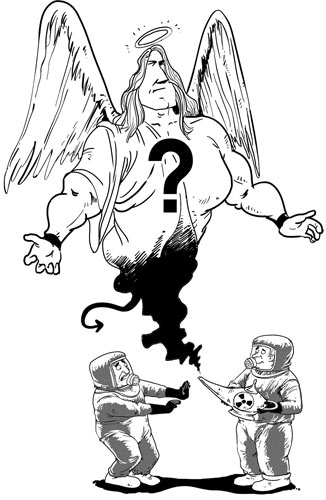
Planning our energy future is difficult. Nuclear, renewable and fossil fuel-based energy sources all have trade-offs - security versus reliability, affordability versus carbon emissions, and capital intensity versus environmental impact, to name a few. And policymakers everywhere can never be too cautious in building nuclear power plants.
The author is an assistant professor at the Lee Kuan Yew School of Public Policy at the National University of Singapore.
E-paper

City of Joy
Welcome to the 'world of smiles' where life meanders slowly.
Preview of the coming issue
Debate on nuclear power revived
The future is now
European Edition

Specials

Ping-pong Hotel
A ping-pong racket-shaped architecture is planned in East China.

Blasting away floating ice
Bombs are dropped over a section of the Yellow River to blast floating ice.

Beloved polar bear died
Berlin's beloved polar bear Knut, an international star died Saturday.