

What's in a name?
Editor's Note: The countdown to Spring Festival has begun for millions of Chinese kitchens all over the world as they prepare for the new lunar year. We help you to understand some of the culinary traditions and recipes that have been passed down from generation to generation.
The all-important reunion dinner is why millions of Chinese move heaven and earth in their efforts to get home by Lunar New Year's Eve.
Tickets for trains, buses and flights are booked months ahead to make sure the journey back is smooth and uninterrupted.
|
Reunion meal is the last dinner for the family before Spring Festival is ushered in. Photos Provided to China Daily |
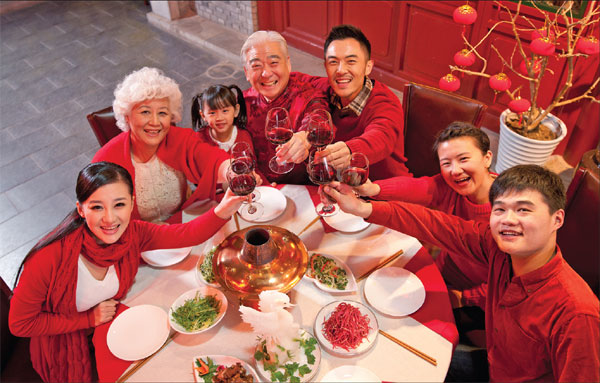
The tuanyuan fan, or reunion meal, is the last dinner for the family before the Spring Festival is ushered in. It is to celebrate a good year gone by and to herald an even better year ahead.
That is why every dish served will have special significance.
Jinyin manwu (House full of silver and gold)
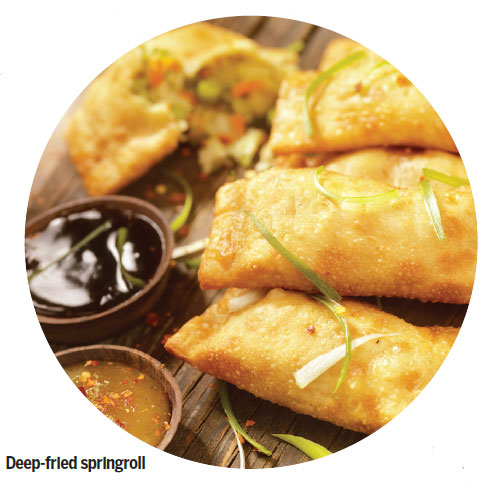
Money bags. Springroll wrappers are used to gather up a savory stir-fry of seafood and vegetables. The little bundles can be steamed or deep-fried.
Water chestnuts, sugar snap peas, carrots, bamboo shoots and juicy black mushrooms are stir-fried with scallops and prawns. The colorful mixture represents the jewels, gold and silver that the family can expect to accumulate in the coming year.
Niannian youyu (Abundance every year)
There must be fish, which is homophonic with "plenty", and it is often the centerpiece on the table. In the south, where fresh sea fish are easily available, the fish is steamed whole, for good luck. Keeping the head and tail intact signifies excellent beginnings and endings. Brightly colored garnishes of spring onions, coriander and chili add to the flavor and ambiance.
In northern regions, where fish is more likely to be from rivers or lakes, it is often fried, then braised in a rich, highly spiced sauce to help mask the natural muskiness of freshwater fish.
Sixi wanzi (Four balls of happiness)
This is a must-have on Beijing tables during the reunion meal. The huge meatballs are first deep-fried and then braised. The generous round mounds of meat are seen as an indication of good times, and they can get as big as a grown man's fist.
They are very similar to the famous lion's head meatball or shizhi tou, with just a change of name to suit the occasion.
Haoshi shengcai (Good markets, great wealth)
A dish of richly flavored braised dried oysters on a bed of fresh lettuce means that the family is in business. Dried oysters are known as haochi which sounds like haoshi, or a "friendly marketplace", and shengcai or lettuce resembles the words for "generating wealth".
Needless to say, dried seafood is also a luxurious addition to the menu, and is indicative of the family's improved spending power.
Hengcai jiushou (Luck and wealth at your fingertips)
More luck will come to the family if there's a pig trotter on the table. Jiushou means a "lucky hand", and that's always good to have if you are indulging in a game of cards or mahjong with friends and family during the holidays.
The trotter is usually braised whole in an oyster sauce, with mushrooms or chestnuts. Sometimes, a rare and expensive black moss is added because it is named facai, homophonic with "sudden prosperity".
Longma jingshen (Spirited exuberance)
Both the dragon (long) and horse (ma) represent "high spirits" in Chinese, and so the lobster, known as "dragon prawn" or longxia, is a popular dish during the Lunar New Year meals.
Of course, it is an expensive ingredient as well, and that in itself makes it an auspicious addition to the festive menu
The Cantonese like it as beautifully presented sashimi, or steamed with plenty of minced garlic and spring onions on a bed of glass noodles to catch the sweet juices.
Another popular way is to coat the lobster pieces with golden bread crumbs and deep-fry them. Then, a rich red tomato and chili gravy is poured over the seafood, making it an even more visually vibrant dish.
Zhanchi gaofei (Wings of success)
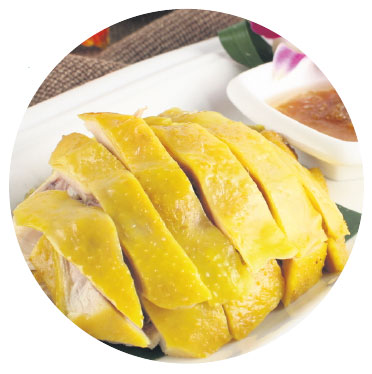
No celebratory meal is complete without a chicken. Its wings represent the ability to fly high, and families with students or ambitious young professionals will feature this on their tables prominently.
The Chinese way is to cook the chicken with bones, and it is cut and reassembled so it keeps its shape. The lyrical name for the chicken is phoenix, after the mythical bird of good fortune. It is either steamed or white cooked, or roasted so it has a delicious crispy skin and juicy meat.
Babao ya (Eight treasures duck)
The name says it all. A nice plump duck is deboned, then stuffed with a delicious glutinous rice studded with ham, pine nuts, dried scallops, Chinese sausages, cubed abalone, sweet corn and green peas. The jewel-like ingredients may vary, but the lucky number is always eight.
In some parts of China, the chefs will shape the boneless duck by tying a string around its middle. The result is a bottle-gourd-shaped bird. It goes without saying that the hulu, or gourd, is another symbol of prosperity.
Xiha daxiao (Laughter all around)
Prawns are known as har in Cantonese, so a platter of ha ha is a must for the new year, because laughter brings more luck.
The prawns are served whole, simply stir-fried in an aromatic mixture of ginger and leeks and flavored with vinegar and sugar. Or they are artfully folded back on themselves to open up like butterflies.
A popular new flavor is with a sauce made with steamed salted egg yolks, which also give the dish a golden gleam.
The list goes on, as the ingredients get richer, and the chefs get inventive, but it's just the Chinese way of celebrating, with well wishes, greetings, and food.
paulined@chinadaily.com.cn
|
No celebratory meal is complete without a chicken. |
(China Daily European Weekly 02/09/2018 page18)