


Life's a game
The chatter of the online gaming community has become part of popular Chinese culture
China is already one of the world's largest and most rapidly growing online gaming markets. According to Statista, a market research and business intelligence portal, the country's online gaming sector was worth 216 billion yuan ($33 billion; 27 billion euros; £24 billion) in 2017 and is estimated to reach 324 billion yuan by 2020.
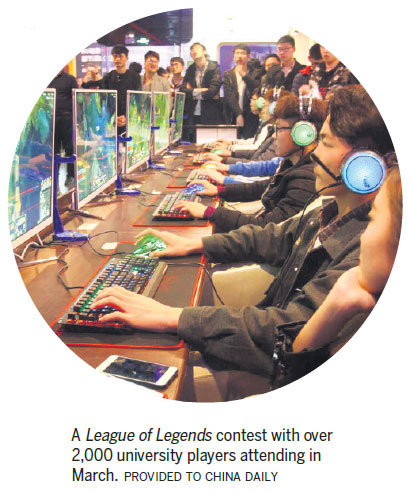
Whether PC or mobile games, people are increasingly turning on fantasy role-playing hits such as Honor of Kings or South Korea's gory "battle royale" phenomenon Playerunknown's Battlegrounds, now widely considered to be the world's hottest video game.
In the process, many gaming terms and jargon have begun to embed themselves in Chinese popular culture and language (much like "Easter egg," "pwn," "noob," "frag," and other terms have in English). For example, during this year's Black Friday, phrases like the following were repeated ad nauseum on online banner ads:
Black Friday promotion: all products seckilling for 50 percent off!
Hēi wǔ cùxiāo: Suǒyǒu shāngpǐn wǔ zhé miǎoshā
黑五促销:所有商品五折秒杀!
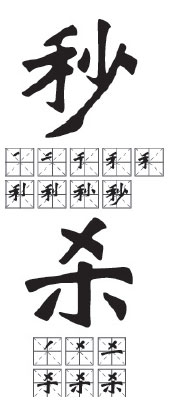
The word “秒杀 (miǎoshā, second killing) is a common term in online gaming, meaning to kill an "enemy" within seconds. In this context, it's intended to stimulate the consumer to "click" or buy quickly, lest the discounted goods sell out. But miaosha can also be used to mean "outclass" in different areas. For example, when reviewing a film, one can comment on the actors' performance by saying:
That veteran actor totally "seckilled" those "little fresh meat" (young, handsome idols).
Zhè wèi lǎo xì gǔ wánquán miǎoshā nàxiē xiǎo xiān ròu
这位老戏骨完全秒杀那些小鲜肉。
A similar phrase is 碾压 (niǎn yā), literally meaning to "roll over." In World of Warcraft, if an enemy monster is three or more levels higher than the player, the damage it wreaks will increase by 50 percent. Such an overwhelming advantage means it's easy for high-level characters to kill lowlevel ones, or "steamroll" them. In daily conversation, nianya thus refers to a wide gap in performance, ability or talent:
Since I entered this top university, I feel my intelligence has been steamrolled by my classmates everywhere.
Zìcóng wǒ jìnle zhè suǒ dǐngjí dàxué, jiù gǎnjué zhìshāng chùchù bèi tóngxué niǎn yā.
自从我进了这所顶级大学,就感觉智商处处被同学碾压。
In online gaming, miaosha and nianya often happen in the process of "PK" - short for "player killing". PK refers to the act of two or more players fighting each other ("PvP" in English gaming slang). But it has been used so widely that these origins have been largely forgotten. In 2004, the hit American Idol-style singing contest Super Girls had a weekly knockout round, in which the two weakest contestants would face off in front of the judges and audience in a round called "PK". Almost overnight, the term went viral, and individuals and even mainstream media began using it as a general expression for "compete with" or "fight against":
In order to win this election, you need to PK against two other candidates.
Yào xiǎng yíngdé zhè cì xuǎnjǔ, nǐ bìxū hé qítā liǎng wèi hòuxuǎn rén jìnxíng PK.
要想赢得这次选举,你必须和其他两位候选人进行PK。
In multiplayer gaming, sometimes you win, sometimes you lose. It's human nature for those defeated to shift blame. Teammates are always the first to take the brunt, known as 猪队友 (zhū duì yǒu, pig teammate), especially anyone whose performance dragged down the whole team. A "pig" is stupid, inefficient and useless. In the real world, when one's progress is seriously hindered by a co-worker or partner, he or she may lament:
It's not a godlike opponent I'm afraid of, but a piglike teammate.
Bùpà shén yīyàng de duìshǒu, jiù pà zhū yīyàng de duìyǒu.
不怕神一样的对手,就怕猪一样的队友。
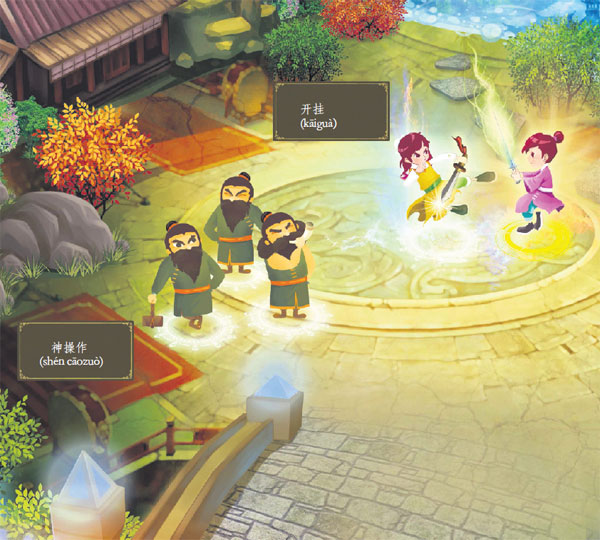
But when you are the pig, you can't shift the blame onto your teammates anymore. In which case, the strength of one's rivals serves as another excuse - you can't compete against their 神操作 (shén cāozuò), literally, "godlike move". In daily conversation, though, this phrase doesn't always indicate admiration, but instead refers to unreasonable or ridiculous behavior. For example:
This company declined my job application just because I am a Virgo. What a godlike move!
Zhè jiā gōngsī jùjuéle wǒ de qiúzhí shēnqǐng, jiù yīnwèi wǒ shì chǔnǚ zuò. Zhēnshi shén cāozuò!
这家公司拒绝了我的求职申请,就因为我是处女座。真是神操作!
Not everyone has the grace to admire their rivals. Some accuse their opponents of cheating. In Chinese, using "cheats" (mods or codes used to illicitly boost your own powers) is called 开挂 (kāiguà), with 挂(guà) meaning "cheating programs". Such an accusation can serve as a compliment in real life. For example, when people saw Jamaican sprinter Usain Bolt break the 100-meter world record, many applauded, while some wondered:
He is so fast! He must be using cheating programs!
Tā pǎo dé tài kuàile! Kāi guàle ba!
他跑得太快了!开挂了吧!
They didn't mean to suggest he was doping - merely that Bolt's athleticism was like he'd received a "power-up". Of course, luck can also determine the result of a game. Here, the expression "RP," short for "Random Point", is useful. It's used in the game Ever Quest. When a team slays a monster, the system will assign a random number to each member of the team - the one who gets the biggest "Random Point" can be rewarded with special equipment. Later, some Ever Quest players, noting that RP happens to be the initials of the Chinese word 人品 (rén pǐn, personality, moral quality), started using 人品 as a byword for luck, (though there are other accounts of how this word came about).
In conversation, 人品好 (rén pǐn hǎo, good personality) means lucky, and 人品不好 (rén pǐn bù hǎo, bad personality) means unlucky. A frequently seen term is 人品问题 (rén pǐn wèntí, a personality issue), which is used by young people to explain everything: Lost your purse? Got ill? Failed an exam? They're all personality issues!
You missed the last bus? That's totally a personality issue.
Nǐ cuòguòle mòbānchē? Nà chúncuì shì rén pǐn wèntí.
你错过了末班车?那纯粹是人品问题。
If this expression can teach us anything, it is that "better" people will naturally have better "luck". Actually, everyone can learn lessons from games. Honor of Kings generated two popular lines that were jokingly put together as a couplet. The first line is: Develop humbly, don't act rashly! Wěisuǒ fāyù, bié làng! 猥琐发育,别浪!
During the game, the line is used to warn teammates to keep a cool head, not put themselves in danger or challenge an enemy too strong for them. In daily life, it's used to remind people not to make a rash decision; it even has a famous historical antecedent in the chengyu 韬光养晦 (tāo guāng yǎng huì), often translated as "hide your brightness". The second line of the couplet is:
Hold on! We can win!
Wěn zhù, wǒmen néng yíng!
稳住, 我们能赢!
This is usually used to boost morale - though in most cases, it's just a white lie - when your team is in critical condition. But it can be used to cheer people up in many situations. For example, if your friend has been chasing a girl for a long time without any "random points", one can encourage him by saying: Hold on, dude! We can win! Xiōngdì, wěn zhù! Wǒmen néng yíng! 兄弟,稳住!我们能赢!
Or maybe he just has "personality issues"? Either way, life is a game: either it seckills you or you roll over it. Just hold on - you can win!
Courtesy of The World of Chinese; www.theworldofchinese.com.cn
The World of Chinese
(China Daily European Weekly 01/26/2018 page23)