Supply-side timeline
Updated: 2016-03-25 08:25
(China Daily Europe)
|
|||||||||


18th century: Intellectual origins based on the writings of classical economist Adam Smith and philosopher David Hume.

1803: Jean-Baptiste Say (1767-1832) in his A Treatise on Political Economy came up with Say's Law, which has been interpreted as "supply creates its own demand".

1950s: The Chicago school of economists including Nobel laureate Ronald Coase and Milton Friedman, challenged the then Keynesian orthodoxy of demand management policies that influenced much of the thinking of Western governments. They argued that governments should let free markets operate and their only role was to control the money supply, hence the term monetarist.
1970s: The term "supply-side economics" was first used but it is disputed as to whether this was by the journalist Jude Wanninski or by Herbert Stein, a former economic adviser to US president Richard Nixon.
Late 1970s: While teaching in California, economist Arthur Laffer developed his theory, later known as the Laffer Curve, which illustrated that tax revenues could fall if tax rates rose above a certain point. His work proved highly influential in the development of Reaganomics.
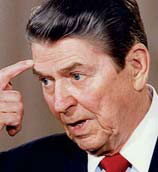
1980: Reaganomics. Ronald Reagan was elected in 1980 and pursued a tax-cutting and deregulation agenda that was largely built on a new supply-side and monetarist approach.

1980s: Thatcherism. British Prime Minister Margaret Thatcher was influenced by Austrian economist Friedrich Hayek, who was not a fan of modern supply-side economics. Nonetheless, her curbing of trade union powers and privatization of nationalized industries are seen as significant supply-side measures.
(China Daily European Weekly 03/25/2016 page1)
Today's Top News
President optimistic for Sino-German cooperation
Info sharing 'is key' as Europe faces terror threat
Uneasy times as Belgium mourns the dead
Belgian bombing suspect still at large: Prosecutor
Belgian media withdraws reports of suspect's arrest
Brussels bombers were brothers El Bakraoui
Chinese citizens in Belgium get help after attack
Europe ramps up security in wake of Brussels attacks








Hot Topics
Lunar probe , China growth forecasts, Emission rules get tougher, China seen through 'colored lens', International board,
Editor's Picks

|

|


|
|

|

|