Laws to hurt sector badly
Updated: 2011-05-13 11:47
By Fu Jing (China Daily European Weekly)


 Twitter
 Facebook
 Myspace
 Yahoo!
 Linkedin
 Mixx
MixxChaos ahead
European Commission health spokesman Frederic Vincent in a recent interview, however, admitted that it would be a difficult process for the EU as the implementation rules and the registration fees vary across geographies.
Lin Haoran, general manager of an herbal medicine importing company in the Netherlands, says that several applications from Chinese herbal companies to Hungarian and Swedish medical authorities have either been rejected or been put on a waiting list. "Local authorities don't know how to deal with it. They just don't have the standards in yet to approve our registration," Lin says.
Some medical organizations have also warned that the directive could trigger a surge in buying of herbal medicines on the Internet, albeit at huge risks.
Industry sources feel that it should be left to the member states to decide if herbal medicines should be put on the market as medicine or something else. That to some extent also indicates the lack of a uniform standard among EU nations.
In countries like Belgium, France and Italy, herbal medicinal products must be registered as medicines while the registration procedure can be difficult and costly. In Holland and the Czech Republic, herbal products can be classified under the food category and there are hardly any restrictions governing their sales.
But products from countries with liberal policies still cannot be sold to other EU member states where those products might be considered illegal after the new directive.
Way forward
Wilfried Legein, president of Belgian College of Traditional Chinese Medicine, says that there is still a window of opportunity in amending the directive, if TCM regulators and industry federations work together with their European colleagues.
"I am not saying the guideline is 100 percent bad but if we work together and put pressure, there is a chance of getting it amended," says Legein, who has been hesitating to open his second TCM college in Belgium due to the guidelines.
Legein says the new EU directive will ban most herbal medicines, and indirectly boost the bottom lines of big pharmaceutical companies.
Dhaenens says his organization is working with the European institutions to change the path of the existing legislation - ideally by amending existing directives, as they did not properly consider the information and nature of the TCM industry during the feasibility assessment period of the legislation.
His organization Benefyt foundation and the Alliance for Natural Health have recently filed a joint lawsuit in the European Court of Justice, the EU's highest judicial body, against the European Commission, demanding a revised legal framework for traditional herbal systems.
"The directive fails to provide a legal framework for importers of herbal medicines, which makes us 'illegal by default,'" Dhaenens says.
E-paper
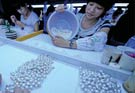
Pearl paradise
Dreams of a 'crazy' man turned out to be a real pearler for city
Literary beacon
Venice of china
Up to the mark
European Edition
Specials

Power of profit
Western companies can learn from management practices of firms in emerging economies

Foreign-friendly skies
About a year ago, 48-year-old Roy Weinberg gave up his job with US Airways, moved to Shanghai and became a captain for China's Spring Airlines.

Plows, tough guys and real men
在这个时代,怎样才"够男人"? On the character "Man"