Foreign toymakers find the going tough in China
Updated: 2011-03-11 10:46
By Shi Yingying and Yang Yijun


 Twitter
 Facebook
 Myspace
 Yahoo!
 Linkedin
 Mixx
Mixx 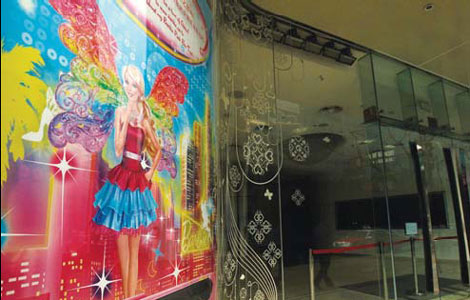 |
|
The Barbie flagship store in Shanghai was closed after just two years. Yong Kai / For China Daily |
US toymaker Mattel's decision to shut its flagship Barbie concept store in Shanghai after just two years has come as a wake-up call for foreign toy manufacturers, including those from Europe.
Though the decision does not amount to a complete pull-out by Mattel, the flagging sales of its iconic Barbie brand is a grim reminder that companies need to invest more in brands suitable for the Chinese market.
The toy market in China is highly competitive and fragmented. Like any other consumer market, preferences and tastes keep changing.
Foreign companies also have to contend with stiff competition from local players who adapt to local trends quickly and have products that are priced much lower.
But all these years Mattel had its trusted Barbie brand to bank on. Mattel launched the Shanghai store in March 2009 to coincide with Barbie's 50th birthday and as part of its attempt to expand the market for its famous doll in China.
The six-story glass and steel townhouse of Barbie in Shanghai's upmarket Huaihai Road shopping area was also supposed to promote the Barbie culture in Shanghai and the prosperous Yangtze River Delta region.
The Barbie store concept unfortunately did not translate into booming sales, says a Mattel representative who declined to be named. "The purpose of the store was to mainly showcase the brand and sales in China depended largely on local retail partners and wholesale distributors," she says.
Mattel has to date not given an official explanation for the store closure, but said that it was not the end for Barbie in China, according to media reports.
Speculation has also been rife in the local media that Chinese customers were not that enthusiastic about Barbie dolls.
"Do Chinese girls really play with Barbie dolls? Nobody really knows what Barbie stands for in China. They might have been happier in Toys R Us," says a writer from Shanghaiist.com, a website about Shanghai.
Barbie also faced stiff competition from other rivals like Hello Kitty from Japan. Rather than targeting the younger generation of children like Barbie, Hello Kitty looks for customers in the 20 to 30 year range as they have better spending power, says Xu Zhenghua, general manager of Hello Kitty's two-floor flagship store in Shanghai.
"Chinese customers are more into cute Japanese cartoon characters such as Hello Kitty rather than the glamorous Barbie."
Apart from the 200 sq m Hello Kitty flagship store, the company has four specialty shops in Shanghai and is contemplating a sixth outlet.
Xu says Hello Kitty sales have been robust in China, but refused to divulge any concrete figures.
Barbie's failure may also pose challenges for European toymakers like Lego, Playmobil, Brio and Ravensburger. Though Lego opened its flagship store in China at the China World Shopping Mall in Beijing in 2007, its sales have been far from promising.
China sales currently accounts for just 1 percent of Lego's global sales, according to a recent media report. The Danish company is, however, confident that there is enough potential for growth and expects to be the market leader in toys by 2020.
One reason why iconic toy brands have failed to make much headway in China is due to their pricing strategy. Barbie and Lego products often command prices that are much higher than competitors'.
"I'm a Barbie fan and I've been to the flagship store seven or eight times. But I only bought clothing for adults there when it was on sale, because the non-sale prices were too high - often close to 1,000 yuan per item," says Kenshin Kong, a marketing website employee.
An average Barbie doll sells for 100 (11 euros) to 200 yuan, around the same price as a Hello Kitty toy. Similar products on Taobao.com, however, are priced at 56 yuan for a pack of 45 items, including 18 different toy dresses. Lego products are priced between 200 to 400 yuan.
Analysts point out that the toy market is one where companies need to quickly change their marketing strategies if they have to be successful in China.
"A business model that was sucessful in the overseas markets doesn't necessarily work in China," says Qi Xiaozhai, director of Shanghai Commercial Economic Research Center. Qi said that nowadays, when children have plenty of toy options, they will not stick to a single brand like Barbie, which is expensive.
E-paper
Factory fever
Despite auto manufacturing bubble scare, car giants gear up expansion of factories.
Preview of the coming issue
Dressed for success
Fabric of change
European Edition
Specials
Earthquake Hits Japan
A massive 8.8 magnitude quake hit the northeast coast of Japan on March 11,2011.
NPC & CPPCC sessions
Lawmakers and political advisers gather in Beijing to discuss major issues.
Slide: Japan quake
Devastating earthquake and tsunami left millions without water, electricity, homes or heat.