


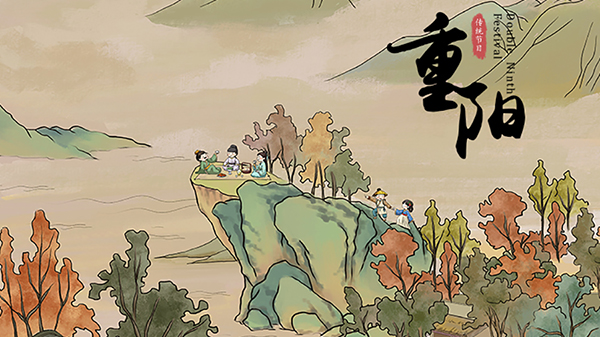
The ninth day of the ninth month on the traditional Chinese calendar is the Chongyang Festival, or Double Ninth Festival.
In ancient times, Chinese people regarded odd numbers as yang (positive or masculine energy), and even numbers as yin (negative or feminine energy). In the I Ching (Book of Changes), the number nine is seen as the highest yang number. On this day, both the month and the day are the ninth, hence the name "Chongyang", meaning "Double Yang". The day carries the auspicious sense of yang energy at its peak.
The pronunciation of "double ninth" (jiu jiu) also resembles the word for "long-lasting" in Chinese, symbolizing longevity and good health. Thus, the Chongyang Festival has long been celebrated as a day of blessings and good fortune.
Traditionally, people believed that climbing to a high place on this day could dispel misfortune and bring peace and longevity. Customs such as mountain climbing, drinking chrysanthemum tea and enjoying autumn scenery gradually developed through the years. Over time, the festival also came to embody the values of respect and gratitude toward the elderly, with filial piety and family togetherness becoming central themes of modern celebrations.
From the number nine to the symbolic "double ninth", and from auspicious meaning to heartfelt traditions, the Chongyang Festival reflects the Chinese way of expressing blessings and affection through numbers and festivals.





